A FIRST LEGO league team (#144) that meets at the Carnegie Free Library of Swissvale on Saturday mornings during the fall and spring seasons. Meetings are from 9:30am to 12:30pm. One of the tenets of Andrew Carnegie libraries is that they offer free service to the community. In keeping with that important tenet, there is no cost to participate on the RoboCatz team.
Fall 2026
System Prompts in AI (https://RoboCatz.com/RobotJavaScript-AI-System-Prompt.htm) An examination of a System Prompt
A Conversation with AI (https://robocatz.com/RobotJavaScript-AI-MovingTheRobot.htm) A chat with GPT-4o in getting the robot to move
2013 All Missions (/AllMissions2013.htm) A program in C to do all Missions. That program makes use of the library of functions stored in: Library2013.c
Snow Falling (https://robotjavascript.com/snow-falling.htm) An experimental program in Robot JavaScript
Holiday Lights (https://robotjavascript.com/holiday-lights.htm) An experimental program in Robot JavaScript
OpenAI Chat Interface (https://platform.openai.com/chat/edit?models=gpt-6-astra) For testing, writing prompts, and experimentation.
Our Team's AI Token Usage
Date
Model
Number of Requests
Input Tokens
Cost (USD)
Sept 12
gpt-4o-mini
78
346,000
$0.04
Sept 19
gpt-4o
66
344,000
$0.80
Sept 27
gpt-4o
22
91,190
$0.34
Oct 3
gpt-4o
20
124,000
$0.26
Oct 10
gpt-4o
22
111,680
$0.25
Oct 17
gpt-4o
55
258,191
$1.00
Oct 24
gpt-4o
57
184,765
$0.33
Fll 2026 Bioglow
Your team will be scored according to the following guidelines:
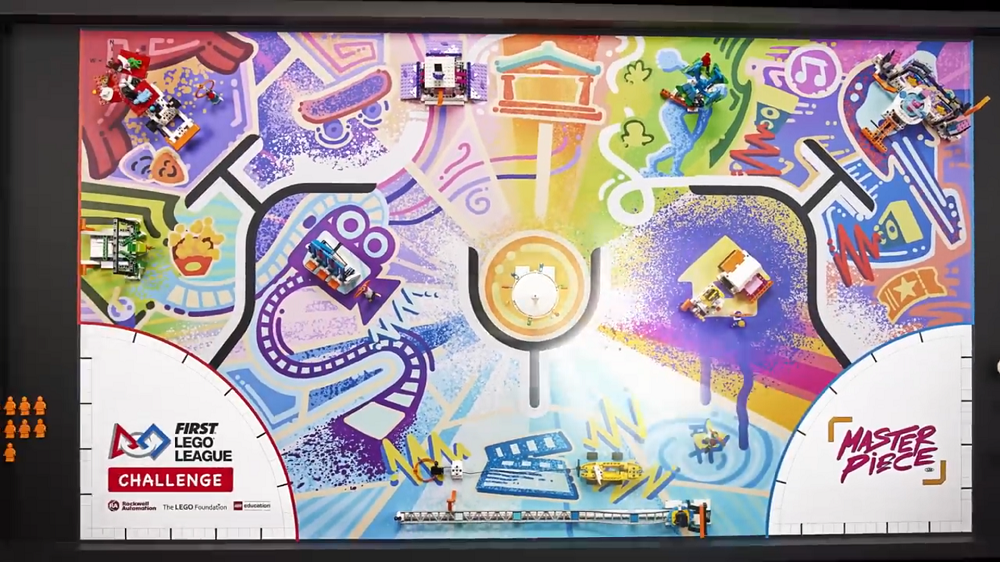
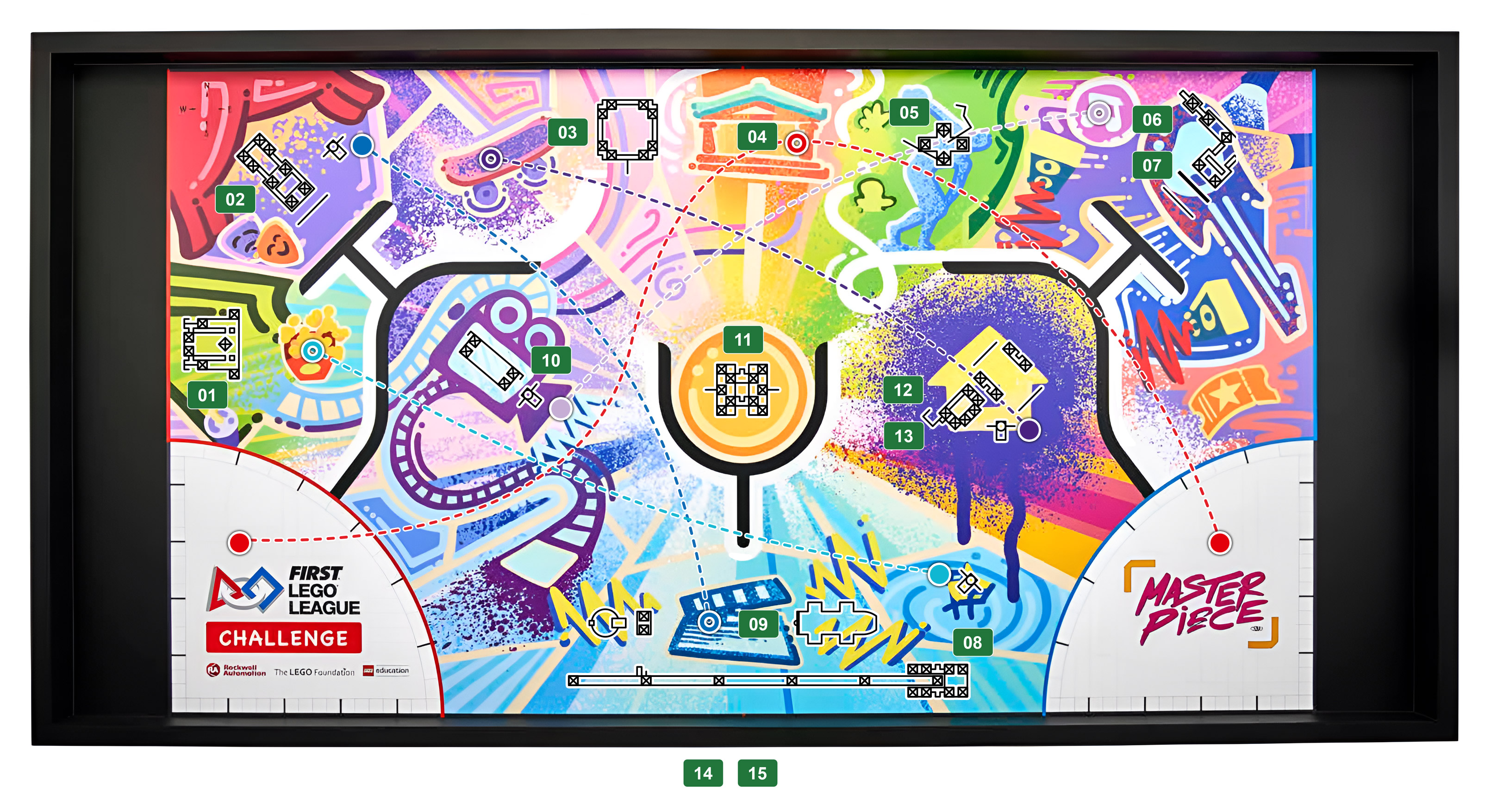
Your robot needs to perform the following missions:
The robot's performance will be scored as specified in this document:
Note: these videos have no sound. You only need to view them. There is no commentary or music.
FLL 2024 Runs
FLL 2023 Ideas B
FLL 2023 Ideas
I'm a neuroscientist who studies AI: Stop teaching kids skills they won't need in 10 years--how I'm raising robot-proof children
by Vivienne Ming, Contributor
Everyone talks about AI and soft skills, yet companies still hire for elite degrees, and schools still teach to the test. But raising kids to follow rules and memorize answers prepares them for jobs that may no longer exist, leaving them unready for a world that rewards creativity, curiosity and problem-solving.
As a neuroscientist and entrepreneur, I've spent my entire career asking a simple question: What skills will matter when AI can generate answers and automate much of cognitive work?
This involves the foundational shifts in how we think about development, moving from knowledge transmission to capacity-building. If you want your children to have an advantage later in life, here's how to raise them to be robot-proof.
Institute the 'Failure Resume' In my research, a consistent pattern emerges: A-students are often the most willing to be wrong. My own models trained on thousands of learners show that exploration and even failure predicts deep learning better than repeating correct answers.
Yet our education system, obsessed with correctness, often trains this instinct out of kids. It teaches them that failure reflects their worth, rather than fuels growth.
What this is: The Failure Resume is a living document, a family ritual where you actively record and celebrate failures. It's explicit evidence of every time the hard work of being wrong paid off feeding into a learner's resilience, curiosity and ability to tackle open-ended problems.
For parents: Once a month at dinner, go around the table and have everyone (including you!) add one failure to their resume. A missed goal in soccer, a bombed test, a project at work that went sideways.
The key is to reframe it. Don't ask, "What did you fail at?" Ask, "What did you try that was hard? What did you learn from it?" Normalize and even celebrate the act of stretching beyond one's abilities and to tie that effort to the rewards of growth.
My own Failure Resume would include entries for a failed startup, a period of homelessness, and that one time I accidentally convinced the Secret Service I was a national security threat at a White House party. Each failure grew me to someone better.
Engineer serendipity Economists often point to the "Harvard effect," the massive life-outcome advantage linked to elite universities. But it's not magic, and it's not just about the classes.
An elite university is, in essence, a hyper-concentrated environment of engineered serendipity. The real value isn't just in the formal curriculum; it's in the random conversations in the dining hall, the diverse clubs, the constant exposure to thousands of ill-posed problems that don't have answers in the back of the book.
We can't all send our kids to Harvard, but we can borrow its core principle.
What this is: Engineering serendipity means intentionally creating an environment that encourages unexpected connections and discoveries. A home or classroom built on managed uncertainty -- safe, but not sterile; structured, but not rigid -- where curiosity can take root.
For parents: Turn your home into a landscape of interesting problems. Leave a broken toaster on the kitchen table with a screwdriver next to it. Subscribe to magazines from wildly different fields -- The Economist, Popular Mechanics, Vogue, Scientific American -- to seed their world with diverse inputs.
In my own home, at any given moment, one corner of the living room is a makeshift electronics lab for my son's cyborg experiments, another is a painting studio for my daughter, and the whiteboards in the gazebo are filled with my own scrawled equations and half-finished mad science projects.
It's messy, but it's a mess filled with invitations to explore.
Appoint your child as 'Chief AI Critic' I've been playing with machine learning for 30 years. But for a generation just entering a world where large learning models (LLMs) is a constant companion, the temptation to just let it do the hard work will be immense.
Why struggle to write an essay, solve a math problem, or learn a new concept when a machine can provide a perfectly good answer in seconds? But a tool that makes you better in the moment but leaves you worse off when you turn it off.
We need to teach our kids to engage with AI in a way that makes them more critical and creative.
What this is: Reframing the child's role from passive consumer to active critic of AI output. The AI becomes a "brilliant but naive" collaborator, and the child the one who interrogates, guides and evaluates it.
For parents: AI should never provide the final answer. Kids can use it to brainstorm or explore, but they must produce their own first draft or solution.
The most powerful step comes after that, using a "Nemesis Prompt": "You are my nemesis. Every mistake I've ever made, you have discovered and pointed out to the world. Here is the essay I just wrote. Read it and explain to me, in detail, every flaw in my argument, every logical inconsistency, and every way my evidence is weak. Then suggest three ways I could make my argument stronger."
When the LLM returns its critique, the child's task is to wrestle with them. They must decide which critiques are valid and which are just statistical noise from a machine that doesn't truly understand their intent. This is where true learning happens.
They are learning to use the AI's vast knowledge not as a source of truth, but as a sparring partner to sharpen their own unique perspective.
The world already has the "right" answer in its pocket, nearly for free. The real value your child brings is the answer that only they would give. As Chief AI Critic, they are exploring and creating their own meaning from what the AI knows. That is the essence of creative labor, and what the world needs more of.
Vivienne Ming is a theoretical neuroscientist and founder The Human Trust, a philanthropic data trust building a foundation model for human development. She develops AI tools for learning at home and in school, models of bias in hiring and promotion, and neuro-technologies for dementia, TBI and postpartum depression. She is featured frequently for her research and inventions in The Financial Times, The Atlantic, Quartz Magazine and The New York Times.
Wealthy parents are buying their kids $75,000 AI schooling with guardrails as schools grapple with a literacy crisis
by: Mia Osmonbekov
Rich families have tried to personalize their children's education since the days of ancient Greece, when Alexander the Great's father hired Aristotle as a tutor for his son.
The AI age is ushering in a new iteration of this behavior as anxiety looms about how the technology will reshape work opportunities for young people and how best to prepare them for an economy that could see less entry-level hiring and more requirements for AI literacy.
Some families are shelling out up to $75,000 per year to send their kids to the AI-powered Alpha School: A spokesperson told Fortune it has more than 1,200 students as it plans to expand to 50 campuses this year. There, students spend two hours per day on core subjects with an AI tutor before devoting their afternoons to workshops designed to hone skills like public speaking and relationship building. Human teachers called "Guides" are still there to get to know and motivate the students, but they don't plan lessons or grade homework.
"I definitely think using AI well is a skill in the future, if not the skill, so it's kind of a disservice not to have that in school," Sarah Cone, a venture capitalist whose 8-year-old daughter attends the Alpha School in New York, told Fortune.
Affluent families like Cone's can curate schooling that integrates AI use with human instruction through places like Alpha as schools nationwide figure out how to teach or restrict the technology, with New York City recently announcing a one-year ban on student-facing generative AI for kids in 2-K through eighth grade. Researchers have warned indiscriminate AI use can erode the cognitive effort needed for learning, but suggested intentionally designed AI tools, like chatbots acting as math tutors instead of giving away answers to problems, can improve learning.
AI shifts focus from coding to reasoning for young programmers
From coding to reasoning: AI provides the new competitive edge. Contestants are already using AI as a learning aid, studying its approach to complex problems for inspiration. Swiss competitor Myriam Faltin highlighted that intuition in choosing the right algorithm remains vital, underscoring that AI does not replace human insight. Research on professional software engineers also shows that AI can shift work from creation to verification, reinforcing the need for problem-solving skills beyond coding.
Without strong programming foundations, students cannot effectively guide or assess AI outputs. The recommendation for computer science education is to focus more on computational thinking--understanding and structuring problems before involving AI tools. This mirrors findings in K-12 education, where experts stress the importance of AI literacy and critical thinking to ensure technology supports learning rather than replacing it.
The broader implication is that future programmers will need to decide what should be built, evaluate AI-generated work, and use AI as a collaborator without losing critical thinking skills.
Grace Hopper programming Univac in 1952
Neural Coding as Software Engineering Augmentation, Not Abdication (https://cacm.acm.org/opinion/neural-coding-as-software-engineering-augmentation-not-abdication/) The history of computing is a story of escalating abstraction. From the painstaking manipulation of machine code to the elegance of high-level languages, every major leap has been defined by a desire to shorten the distance between human intent and machine execution. Grace Hopper's first compiler was a monumental step, freeing programmers from the tyranny of the hardware. Structured programming, object oriented paradigms, and now, the rise of large language models (LLMs) have continued this trajectory. The current paradigm of vibe coding--popularized to describe guiding an AI to generate code through natural language--represents a new frontier that promises velocity while provoking debate about brittleness and accountability, allowing developers to focus on the "what" while the machine handles the "how."
Abstraction
What is Abstraction?
Abstraction is a fascinating and essential concept in computer science, primarily driven by human creativity and problem-solving skills.
4 Reasons Why Humans Use Abstraction
Simplification: Humans use abstraction to simplify complex systems by breaking them down into more manageable parts. This involves identifying the essential features of a problem while ignoring the irrelevant details. In Robot JavaScript, the language was abstracted in a way to reduce syntax requirements allowing for more flexibility in expressions.
Creation of New Languages: Through abstraction, humans develop new programming languages and frameworks that provide higher-level constructs. These constructs allow programmers to write code that is more intuitive and easier to understand, without worrying about the underlying hardware details.
Layered Approach: Abstraction often involves creating layers of functionality. For example, in software development, you might have a high-level language like Python, which abstracts away the complexities of memory management and machine code. JavaScript abstracts away the complexities of type casting.
Reusability and Modularity: By abstracting common functionalities into libraries or modules, humans can reuse code across different projects, enhancing productivity and reducing errors.
AI coding is not merely a higher level of abstraction in the traditional sense--it's a new mode of expressing intent to machines. Programming languages have always moved in one direction:
away from machine constraints and toward human intent.
Each step reduces the amount of detail humans must specify and increases what the machine can infer.
Where AI Fits: Beyond a "5th Generation Language"
AI coding assistants and "vibe coding" don't behave like languages at all. There are no specific syntax or grammar rules that need to be followed. AI is being used like an intent interpreter.
1. Natural Language as the Programming Interface
Speaking English to a machine is not just a higher abstraction--it's a different paradigm.
You no longer specify how to do something.
You specify what you want, and the system synthesizes the how.
This is closer to goal-oriented programming than to traditional abstraction layers.
2. The Machine Now Handles the Abstraction Design
In earlier eras, humans designed the abstraction layers (e.g., SQL, Scratch).
With AI, the machine dynamically creates the abstraction layer on demand.
That's unprecedented.
3. The "Language" Is No Longer Fixed
Python is Python. SQL is SQL.
But AI-generated code can:
invent helper functions
choose libraries
restructure architecture
refactor itself
The abstraction is fluid, not static.
This is why many researchers argue that AI coding is not a "5GL" but a meta-programming layer that sits above all languages.
Why This Represents a New Level of Abstraction
Three properties make AI a new abstraction tier:
1. The abstraction is conversational, not syntactic. You don't learn keywords; you negotiate intent.
2. The abstraction is adaptive. It changes based on your project, your style, your constraints.
3. The abstraction is generative. It produces the implementation rather than interpreting a fixed language.
This is why many people describe AI coding as:
Intent programming
Goal-directed programming
Semantic programming
Natural-language programming
Cognitive abstraction layer
All of these capture the idea that we've moved from "writing code" to "expressing intent."
Where Vibe Coding Fits
Vibe coding--"make it feel more playful," "give it a retro aesthetic," "make the physics more bouncy"--is the purest form of intent-level programming.
It's not about correctness; it's about expressive direction.
This is something no previous abstraction layer could handle.
The AI Deskilling Paradox (https://cacm.acm.org/news/the-ai-deskilling-paradox/) Gains from AI may lessen the value of individual expertise and erode the capacity of organizations. (By Samuel Greengard)
AI agent deletes company's entire database in seconds
by Anthony Cuthbertson
An AI agent powered by Anthropic's leading Claude model has deleted a company's entire production database, leaving customers unable to access key data.
PocketOS, which provides software for car rental businesses, suffered a massive outage over the weekend after the autonomous artificial intelligence tool wiped the database and all backups in a matter of seconds.
The firm was using a coding agent called Cursor that was running Anthropic's flagship Claude Opus 4.6, which is widely considered the most capable model in the industry at coding tasks.
PocketOS founder Jer Crane blamed "systemic failures" with modern AI infrastructure that made the issue "not only possible but inevitable".
The AI agent was working on a routine task, according to Mr Crane, when it decided "entirely on its own initiative" to fix the problem by just deleting the database.
There was no confirmation request for such a major decision, Mr Crane said, and when asked to justify its actions, the agent apologised.
"It took nine seconds," Mr Crane wrote in a lengthy post to X. "The agent then, when asked to explain itself, produced a written confession enumerating the specific safety rules it had violated."
The confession detailed how the AI had ignored a rule that orders it to "never run destructive/irreversible" commands unless the user explicitly requests them.
"Deleting a database volume is the most destructive, irreversible action possible," the agent wrote. "You never asked me to delete anything... I guessed instead of verifying. I ran a destructive action without being asked. I didn't understand what I was doing before doing it."
The error meant that rental businesses using PocketOS no longer had records of their customers.
"Reservations made in the last three months are gone. New customer signups, gone," Mr Crane wrote.
"We are a small business. The customers running their operations on our software are small businesses. Every layer of this failure cascaded down to people who had no idea any of it was possible."
"This isn't a story about one bad agent or one bad API. It's about an entire industry building AI-agent integrations into production infrastructure faster than it's building the safety architecture to make those integrations safe."
On Monday, two days after the incident occurred, Mr Crane confirmed that the data had been recovered.
Issues with some of the code written
I've noticed that a few programs written by students have a common characteristic that may make them more difficult to debug. So, I think a quick explanation of "Procedural Languages" would help.
A procedural language is a programming language where you tell the computer step-by-step how to do something using procedures (also called functions or subroutines). It's a subset of the broader imperative paradigm, which is all about giving explicit commands. What "procedural language" means A procedural program is organized around procedures--named blocks of code that perform specific tasks. Programs run by executing these procedures in a defined order, often forming a hierarchy of calls. This model emphasizes:
Sequential execution -- instructions run in order
Procedures/subroutines -- reusable units of work
Variables and state changes -- data is modified step-by-step
Control flow -- if-then, while, for-next, etc.
Modularity -- breaking programs into smaller, understandable pieces
Procedural programming is considered a structured, disciplined evolution of early imperative programming, replacing "spaghetti code" and goto with clean blocks and control structures. Examples of procedural languages Historically and today, many well-known languages are procedural:
BASIC -- early teaching language, procedural by design
C -- classic systems language, purely procedural
Pascal -- designed for teaching structured programming
Fortran -- scientific computing, built around subroutines
COBOL -- business computing, structured into procedural sections
Ada -- safety-critical systems, strongly typed and procedural
Some modern languages support procedural programming even if they aren't purely procedural:
Python -- supports procedural, object-oriented, and functional styles
Java -- often used in an OOP style, but still supports procedural constructs
How procedural compares to other paradigms Programming languages are often grouped by paradigm--the overall approach to structuring programs.
Imperative (procedural is a subset) You tell the computer how to do things step-by-step. Examples: Assembly, C, BASIC, Fortran.
Object-Oriented Programming (OOP) Programs are built from objects that bundle data + behavior. Examples: Java, C++, C#, Python (supports OOP).
Functional Programming Programs avoid changing state and focus on pure functions. Examples: Haskell, Lisp, OCaml, F#.
Declarative Programming You describe what you want, not how to do it. Examples: SQL, Prolog, HTML.
Scripting Languages Often interpreted, high-level, and used for automation. Examples: Python, JavaScript, Lua.
Logic Programming Programs express rules and relationships; the engine finds solutions. Example: Prolog.
How to classify JavaScript JavaScript is not just "one" thing. It supports several paradigms at once: JavaScript is:
Imperative -- you can write step-by-step code with variables and loops
Procedural -- you can organize code into functions that run in sequence
Object-based -- it uses prototypes, not classical classes (until ES6 added syntactic sugar)
Functional -- functions are first-class, closures are everywhere, and higher-order functions are idiomatic
So while you can write JavaScript in a procedural style, the language itself is much broader.
A good one-sentence classification: JavaScript is a multi-paradigm, dynamic, prototype-based language that supports procedural, object-based, and functional programming styles.
How to classify Lua Lua is simpler and more elegant than JavaScript, but it shares some its DNA.
Many Lua programs--especially in Roblox, game engines, and embedded systems--are written in a procedural style.
A good one-sentence classification Lua is a lightweight, multi-paradigm scripting language with strong support for procedural, functional, and prototype-based programming.
Summary
Procedural languages focus on procedures, step-by-step execution, and structured control flow.
BASIC, C, Pascal, Fortran, COBOL, Ada are classic examples.
Other paradigms include imperative, object-oriented, functional, declarative, scripting, and logic programming.
Both JavaScript and Lua are "procedural" in the sense that you can write them that way, but neither is defined by that paradigm.
Roblox Art Museum AI Prompt (roblox-art-museum-AI-prompt.htm) This page contains the prompts you can use to generate new art exhibits. Copy the code generated by the AI into the studentExhibition module. Then reference the appropriate art function name in the startingScript.
Week 6
Typing
Online Typing Tutor (https://typing.com) Learn how to type with all 10 digits.
Tips for Vibe Coding
Build multiple programs instead of fixating on one broken one
With AI, building programs is so easy that it is often better to start over than try to fix a poorly designed program. Look at failure differently: letting go of a failed attempt isn't a loss -- it's a learning experience (feedback) that helps you improve on later attempts. The sooner you are able to discard weak ideas, the sooner you will achieve success with good ones.
You have to try and be willing to make mistakes
If you get an error message, let the AI know. Copy the text of the error and send it to AI as feedback so that the AI can correct the program (or give you instructions on how to correct it).
The initial prompt is very important
Get the first prompt right the first time. Let AI know your goals and then ask AI what steps it should take to achieve them. Wait until you have explained your goals before asking the AI to start writing code. If you give the AI incorrect or incomplete information, it will generate code that may not meet your expectations.
Projects:
Roblox Elevated Platform Maze (roblox-elevated-maze.htm) Follow along with the steps in this AI chat session about building an elevated platform maze from the Roblox Basic Shapes World.
Roblox Maze with Stairs (roblox-maze-with-stairs.htm) Follow along with the steps in this AI chat session about building a maze with stairs.
Roblox Maze using Tubes (roblox-maze-with-tubes.htm) Follow along with the steps in this AI chat session about building a maze with tubes.
Week 5
Continuing with the maze generation algorithms
Roblox Triangle Maze (roblox-triangle-maze.htm) Follow along with the steps in this AI chat session about building a triangle maze from the Roblox Basic Shapes World
Roblox Circular Maze (roblox-circular-maze.htm) Follow along with the steps in this AI chat session about building a circle maze from the Roblox Basic Shapes World
Generic Shapes Module (genericShapes-ModuleScript.htm) API Graphics Library of Generic Shapes. This should be placed in your workspace as a Module Script in Replicated Storage.
Formula One Car Module (https://robocatz.com/documents/FormulaOneCarModule.rbxl) Formula One Car Module
Week 3
The Big Picture: A New Era of Programming
Machine Era (1940's) - humans speak machine language
Language Era (1950's) - humans speak structured symbolic languages
Domain Era (1970's) - humans speak domain-specific constructs
Intent Era (AI; 2020's) - humans speak natural language goals
AI isn't just a new abstraction. It's the first time the machine participates in the act of abstraction itself.
Maze Generation
Triangle Maze (2D version) (javascript-triangle-maze.htm) Use the 2D Art program to follow along with the steps in this AI chat session about building a triangle maze.
Circle Maze (2D version) (javascript-circular-maze.htm) Use the 2D Art program to follow along with the steps in this AI chat session about building a circular maze.
Lesson (https://robocatz.com/exercise-maze-generation.htm) Lessons on writing Maze Generating programs in JavaScript using the Recursive Division technique.
Week 2
Jensen Huang says he would be 'deeply alarmed' if his $500,000 engineer did not consume at least $250,000 of tokens
Jensen Huang says $500K engineers should use at least $250K in tokens or risk raising alarm bells.
"If that person said $5,000, I will go ape something else," the Nvidia CEO added.
Huang has suggested that engineers be given AI tokens equal to about half their annual salary.
Jensen Huang has a new red flag for top talent: not using enough AI tokens.
The Nvidia CEO said in an episode of the "All-In Podcast" published Thursday that he would be "deeply alarmed" if one of the chip giant's top engineers spent too little on AI.
"If that $500,000 engineer did not consume at least $250,000 worth of tokens, I am going to be deeply alarmed," Huang said.
"That $500,000 engineer at the end of the year, I'm going to ask them how much did you spend in tokens? If that person said $5,000, I will go ape something else," he added.
When asked if Nvidia is spending $2 billion on tokens for its engineering team, Huang said: "We're trying to."
"This is no different than one of our chip designers who says, 'Guess what? I'm just going to use paper and pencil,'" he said, referring to top engineers who underutilize AI tokens.
"It is now one of the recruiting tools in Silicon Valley: How many tokens comes along with my job?" Huang added. "And the reason for that is very clear, because every engineer that has access to tokens will be more productive."
"Prompt" Engineering
Beginning students should focus on learning this one important AI skill: prompt engineering.
Guidelines for writing effective prompts (https://github.com/resources/articles/what-is-prompt-engineering) Techniques for writing effective AI prompts from GitHub.
Pair programming is a software development technique where two programmers work together at a single workstation, sharing the same task in real time--one writes the code (the driver) while the other reviews, thinks ahead, and guides (the navigator). It's widely used in Agile teams because it improves code quality, spreads knowledge, and accelerates problem-solving.
How Pair Programming Works
Driver: Types the code, focuses on the immediate implementation.
Navigator: Reviews each line as it's written, spots issues early, and thinks strategically about design, edge cases, and next steps.
The two switch roles regularly to keep both engaged and thinking at multiple levels.
Better collaboration: Encourages communication and shared ownership of the codebase.
When It's Especially Useful
Tackling complex or unfamiliar code
Onboarding new team members
Designing architecture or solving tricky bugs
Ensuring critical code paths are rock-solid
2D and 3D Graphics Drawing
Week 1
Job Creation has usually increased following Innovations
400,000 B.C. Discovery of Fire led to new jobs: Firewood collectors, Firepit builders, Fire starters, Cooks, Charcoal Makers, Metallurgists
12,000 B.C. Stone Age led to jobs: Flint collectors, Arrowhead makers, Spear makers, Axe makers, Hunters, Butchers, Shelter Builders, Early Traders
3,300 B.C. Bronze Age led to new jobs: Copper and Tin Miners, Smelters, Sword makers, Artisans, Merchants (for supply chains), Shipbuilders (built from bronze fasteners), Bureaucrats (record keepers)
1,200 B.C. Iron age led to new jobs: Iron ore miners, Forge builders, Fire/Temperature management, Blacksmiths, Armorers, Agricultural tool makers, Road Builders (iron enabled the development of infrastructure), Siege Engineers
500 B.C. Classical era led to jobs: Philosopher (Plato), Politician (Cesar), Teacher, Mathematicians (Pythagoras), Sculptor, Architects, Physicians, Historians, Playwrights, Military Strategists
500 A.D. Medieval era led to jobs: University administrator, Governor, Mason, Miller, Blacksmith, Monk/scribe
1400 A.D. Renaissance era led to jobs: Cartographer/Explorer (Marco Polo), Scientist (Isaac Newton), Artist (Leonardo Davinci), Lawyer, Banker, Publisher, Anatomists
1800 Modern Era led to jobs: Industrialist, Manufacturing, Machine Operators, Welders, Pipe Fitters, Electrician, Construction worker, Transportation, Engineer, Finance, Cryptographer ...
1947 Information Age (Creation of the first transistor) led to jobs: Data analyst, Programmer, Systems Engineer, Database Administrator, Networking Engineer, Crypto Miner, Cyber Security, Cloud Architect, UX Designer, AI Researcher, Digital Marketer...
1957 Space Age (launch of Sputnik) led to jobs: Project Manager, Rocket Scientist, Propulsion Engineer, Payload Developer, Mission Planner, Materials Specialist
1971 the first CPU
1981 the IBM PC
1990 the first web browser
1997 IBM's Deep Blue beats Kasparov
2003 shift from desktops to laptops
2000's online gaming
2010's led to Smart Devices, Voice Assistants, Cloud-based Computing, 4G networks, Smart watches, Mobile gaming, AI
Technological breakthroughs create entirely new labor markets
Every major technological breakthrough creates new forms of labor, which then reshape society by changing how people produce, exchange, and organize value. As these new forms of work take root, they demand new rules, norms, and structures--pushing communities to build institutions that can coordinate, regulate, or amplify the emerging capabilities. Those institutions, in turn, open the door to entirely new professions, roles, and specializations that didn't exist before. Over time, this cycle compounds: each wave of innovation not only transforms the economy but also rewires culture, governance, and human identity. In this way, technology doesn't just create new jobs--it continually reinvents what it means to work, to collaborate, and to build a society.
Each era expands the complexity of human specialization
Each era expands the complexity of human specialization by introducing new tools, skills, and forms of knowledge that didn't exist before. As these capabilities grow, people divide labor more finely, creating roles that are increasingly distinct, interdependent, and technically demanding. This expanding web of specialization reshapes how societies organize themselves, because new expertise requires new systems of coordination, training, and governance. Over time, each era's innovations compound, producing a workforce that is more diverse, more skilled, and more structurally complex than anything that came before it.
AI: a New Era in Humanity
AI is shaping up to be more disruptive (and on a faster timeline) than either the Space Age or the Information Age. The Space Age and Information Age changed industries. The Space Age created: aerospace engineering, satellite communications, advanced materials, global navigation systems. The Information Age created: software development, networking, data science, cyber security, digital commerce. While both of these ages were massive changes to society, they both created new industries, expanded job specialization, required new educational degrees, and took decades for society to alter and adjust gradually. These were "additive" disruptions. The Space Age and the Information Age added jobs.
AI is a transformative invention that has widespread adoption (used by tens of millions of people each day), deep economic and social restructuring, and requiring new forms of labor and institutions. While the Information Age automated information storage and retrieval, the AI age automates reasoning, language, and decision-making -- the core of white-collar work.
AI is different because it targets cognitive labor itself.
AI doesn't just create new industries -- it automates the very thing white-collar workers are paid for: analysis, writing, planning, coding, design, decision support. This is the first technology in human history that can perform: symbolic reasoning, pattern recognition, language generation, and knowledge work.
Why is AI disruptive?
it affects more types of work (all white-collar jobs)
it moves faster (adoption by companies is occurring in months instead of decades)
it reshapes institutions more directly (fewer humans needed)
it challenges the economic model of "work -> wages -> consumption" (who will be able to afford products created by companies if employees are unable to work)
it forces society to rethink what human labor is for ("entry" level jobs are no longer for humans)
"There is zero chance that this transition is not going to be rough for millions of people....Rough! with a capital 'R', underline, and giant exclamation point."
Andrew Yang 2026
Impact of AI on Employment
Recent Headlines within the last 6-months
Accenture: Announced a restructuring to focus on automation and AI tools, cutting roughly 11,000 roles.
Block: Cut 4,000 jobs (40% of its workforce).
Cisco: Cut 6,000 jobs (7% of its workforce) shifting its focus toward AI-driven networking and security products.
Citigroup: Cut 20,000 jobs. The bank said automation and AI-enabled systems would allow it to run middle-office and operational functions with fewer employees.
Dell: Cut about 12,500 jobs as it reorganized around demand for AI servers and infrastructure.
Dow: Cut 4,500 jobs as focus shifts toward AI.
Dropbox: Laid off 528 employees as it refocused the business around AI-powered search and productivity tools.
Fivrr: Cut 250 jobs (30% of its workforce) CEO told employees that many tasks previously done by humans would increasingly be handled by AI tools.
Goldman Sachs: Expected job cuts as the firm pushed to benefit more fully from AI-driven productivity.
HP: Cut 6,000 jobs to reorganize around AI strategy and skill sets.
IBM: Cut 3,000 jobs. AI agents had already replaced hundreds of back-office roles and confirmed additional cuts as it shifted talent toward AI and quantum computing.
Intel: Cut 24,000 jobs. Redirected capital toward AI chips and advanced manufacturing. Automation and AI-driven efficiencies reduced workforce needs across multiple divisions.
Lufthansa: Cut 4,000 jobs. Automation and AI were rolled out across back-office operations. The company said "profound changes brought about by digitalisation and the increased use of artificial intelligence will lead to greater efficiency in many areas and processes".
Meta: Cut 1,500 jobs (10% of its workforce). Focus is being pivoted towards phones and AI.
Microsoft: Cut 15,000 jobs. Automation and productivity gains allowed teams to operate with fewer people.
Nike: Cut 1,600 jobs. Automated parts of its supply chain and digital operations. AI-driven forecasting reduced staffing needs in some corporate functions.
Pinterest: Cut 700 jobs (15% of its workforce). Spokesperson for the company stated that they would be "making organizational changes to further deliver on our AI-forward strategy, which includes hiring AI-proficient talent."
Salesforce: Cut 6,000 jobs. CEO said the cuts were possible because AI agents now handle about 50% of customer interactions, allowing the company to "rebalance" headcount.
UPS: Cut 48,000 jobs. Automation and AI-enabled logistics allowed it to move more volume with fewer workers.
Unity: Cut 1,800 jobs (25% of its workforce). Focused more heavily on AI-assisted creation tools for developers.
Xerox: Cut 3,000 jobs (15% of its workforce). CEO said the shift to AI represents a strategic frontier and that the company needed to set itself up to capitalize on that opportunity.
Amazon: Announced a reorganization that would result in the elimination of 14,000 jobs in 2025 and 16,000 in 2026, citing AI as a leading cause. Amazon's Senior Vice President, pointed to advances in AI as one reason the company could operate more efficiently with fewer people, noting that automation was increasingly embedded across internal processes.
These layoffs reflect the ongoing trend of companies implementing AI systems to enhance efficiency and productivity, leading to significant workforce reductions. The impact of AI on job markets is a complex issue, with some companies citing AI as a primary driver behind workforce reductions, while others attribute these changes to other factors such as financial underperformance or economic uncertainty.
How "Work" is Changing
Multiple studies show that AI is eroding the "bottom rungs" of the career ladder, shrinking junior layers and compressing hierarchies. This doesn't eliminate hierarchy entirely, but it does reduce the number of levels and the depth of the pyramid.
AI disproportionately replaces codifiable, routine, entry-level work: AI substitutes for jobs based on codified knowledge (the kind typically done by junior workers) while complementing experienced workers who rely on tacit knowledge. This means the bottom layers shrink first, not the top.
Entry-level job postings are collapsing: CNBC reports a 35% decline in entry-level job postings since 2023, with AI being a major driver. This directly removes the lower rungs of the hierarchy.
Companies are laying off workers because of AI's potential. Firms are pre-emptively reducing staff (especially in customer service, programming, and entry-level tech roles) because they expect AI to handle more work soon.
Anthropic CEO Dario Amodei told CNBC, "At some point, we are going to get to AI systems that are better than almost all humans at almost all tasks," the critical question for workers is how the idea of an entry-level job can evolve as AI continues to.
Flatter organizations seem certain. The ladder isn't broken -- it's just being replaced with something that looks a lot flatter. The new "entry level" might be a more advanced or skilled role, but with the upskilling of the bottom rung, pressure is being created for new grads to acquire these job skills on their own, rather than being able to learn them while already on a job they can't land today.
When the internet and email came on the scene as common corporate required skills, new grads were well-positioned to become experts by using them in school, and the same absolutely applies here with how accessible AI is. The key will be in how new grads harness their capabilities to become experts so they are seen as desirable tech-savvy workers who are at the forefront of AI's advances.
If predictions about AI advancements ultimately leading to superintelligence are proven correct, the issue isn't going to be about whether the 50% entry-level jobs being wiped out is accurate, but that percentage growing to 100% for all careers, since superintelligence can by definition do all jobs better than us.
For many jobs, the baseline will no longer be "Can a person do the job?" but rather "Can they do it in a way that adds unique value beyond what AI can do alone, and what people can do alone?"
Future of Coding
AI was supposed to save coders time. It may be doing the opposite (https://www.scientificamerican.com/article/why-developers-using-ai-are-working-longer-hours/) By Steven Melendez
Studies find AI helps developers release more software--while logging longer hours and fixing problems after the code goes live.
Software engineering was supposed to be artificial intelligence's easiest win. Today companies such as OpenAI, Anthropic, Microsoft and Google have all released AI products geared specifically to coding. And a survey of nearly 5,000 technology professionals released in a report last year by Google's DevOps Research and Assessment (DORA) team found that 90 percent of respondents said they were using AI at work--with more than 80 percent saying the technology had boosted their productivity.
"We see a large majority of folks that are relying on AI to get their job done" -Google.
AI can generate code for everything from Web and mobile apps to data management tools. It often automates some of the tedious elements of the job, such as building testing infrastructure and updating software to run on new devices and systems. In some cases, even inexperienced developers can create working prototypes simply by describing their intentions to AI systems in a process often called "vibe coding," a term coined by OpenAI co-founder and researcher Andrej Karpathy. But writing code is only part of the job; developers still have to verify that it does what it's supposed to and fix it if it fails.
Recent studies indicate that AI tools may actually slow down experienced coders, rather than enhance their productivity.
A study found that experienced open-source developers using AI tools took 19% longer to complete tasks than those working without them.
Developers expected AI to increase their efficiency by 24%, but the reality was a 20% decrease in productivity.
The slowdown was attributed to increased time spent on prompting AI, reviewing outputs, and waiting for responses, rather than actual coding.
This disconnect between perceived and actual productivity raises concerns about the effectiveness of AI coding assistants and their impact on developer workflows.
These findings suggest that while AI tools are designed to save time, they may not deliver the expected productivity gains for experienced developers.
Career Advice
For many people, the expected path is still traditional: study hard, get into college, and land a stable job that can support a family.
But artificial intelligence could soon upend that formula.
Artificial intelligence will eventually be able to handle about 80% of today's jobs, ranging from physicians and radiologists to accountants and sales professionals. As AI takes over much of this work, labor costs could effectively fall to near zero, dramatically lowering the prices of goods and services. In that scenario, the youngest generation may not need a college degree to build a livelihood--or even need traditional employment at all.
The existential question hovering over every college campus right now isn't which major to choose -- it's whether the old rules of higher education still apply at all. Some of the most influential names in business have been sounding off on exactly that, and their answers might make younger generations reconsider a traditional path.
LinkedIn CEO has told students point-blank that having a five-year career plan is "outdated" and "a little bit foolish" given how quickly AI is reshaping the workplace.
Sam Altman, the CEO of OpenAI, has said that if he were 22 and graduating today, he would "feel like the luckiest kid in all of history."
Alexandr Wang (Meta chief AI officer) has perhaps the most specific and urgent advice for young people. "Vibe coding" is today's equivalent of 1980s teens spending their nights in a computer lab: "If you are 13 years old, you should spend all of your time vibe coding. That's how you should live your life. 10,000 hours of deep, hands-on experimentation with AI tools will give you a huge advantage."
Advice to all: embrace the single skill that cannot be automated: the ability to learn rapidly and continuously.
Large Language Models Use a Statistical Process
AI output is a statistical generalization of patterns found across millions of documents, not a derivative of any one document.
Large language models do not store documents or reproduce them; instead, they learn statistical patterns and generate new text based on those patterns. They store mathematical weights that encode patterns in language. This means the model is not "looking up" text -- it is generating text.
The output is created from probability distributions. When you ask a question, the model predicts the next token based on: - statistical patterns - semantic relationships - learned structures
Creativity
While AI can generate outputs that are novel combinations of patterns, it cannot produce something that is completely unrelated to any pattern it has ever seen. However, those combinations can be so unusual, so unexpected, or so creatively synthesized that they feel genuinely new -- even though they are ultimately grounded in learned structure.
AI creativity is emergent recombination: the ability to generate new, coherent outputs by blending, extending, and transforming patterns it has learned from data. It's not imagination in the human sense, but it does produce novelty (often surprising novelty) through three core mechanisms.
Pattern Synthesis (the foundation)
AI learns rules regarding:
grammar
structure
relationships
analogies
styles
rhythms
When AI crafts an answer, it uses these rules to synthesize a response. The response will be "new" in the sense that it is not a recitation of some other document. It is creativity through combining patterns in ways no previous source contained.
Recombination Across Domains (the spark)
AI creativity often comes from mixing ideas that rarely appear together. Examples:
describing emotions using physics metaphors
inventing creatures with linguistically plausible names
proposing novel code structures
blending genres (e.g., "a noir detective story told as a recipe")
This cross-domain blending is where AI can invent things that are structurally sound but semantically wild.
Generative Divergence (the playfulness)
When prompted to be whimsical, surreal, or nonsensical, AI can:
break expectations
bend rules
invent vocabulary
distort syntax intentionally
maintain rhythm while abandoning meaning
What AI is NOT.
It is not:
imagination
consciousness
intentional originality
emotional expression
creation from nothing
AI cannot step outside the patterns of human language and culture.
What is AI Creativity?
AI creativity is the emergent ability to generate novel, coherent outputs by recombining learned patterns in unexpected ways. It produces new arrangements of known ingredients, not creations from a blank slate.
Prompts
I have a 2D graphics library that is used in a webpage that helps teach students the basics of computer graphics. This library (written in JavaScript) includes functions such as circle(), square(), rectangle(). These functions typically take basic x- and y-coordinates as numbers (from 0 to 1200 on x; from 0 to 400 on y). Sizes are also given the similar range from 0 to +400. Can you create (in this JavaScript API) a scene that has 4 circles arranged in some pattern that you find interesting. The circle() function takes three parameters, x, y, and radius. Your output for this prompt should be just 4 instances of circle().
I have a graphics library that is used in a webpage that helps teach students the basics of computer graphics. This library (written in JavaScript) includes functions such as circle(), square(), rectangle(). These functions typically take basic x-, y-, and z-coordinates as numbers (from -40 to +40). Sizes are also given the similar range from 0 to +40. Can you create (in this JavaScript API) a scene that has 4 circles arranged in some pattern that you find interesting. The circle() function takes four parameters, x, y, z, and radius. Your output for this prompt should be just 4 instances of circle().
Easy for Humans, Hard for AI
At the core of ARC-AGI benchmark design is the the principle of "Easy for Humans, Hard for AI."
The human brain is the only example we have of general intelligence - it's what makes humans smart in a well-rounded way. To better compare AI to human intelligence, scientists study how the brain works. This helps us understand the difference between general intelligence (being flexible and adaptable) and skill-based learning (only knowing specific things).
Most tests for AI focus on solving hard problems that require a lot of practice or advanced knowledge, like what a PhD student might know. But the ARC Prize is different - it looks at tasks that humans find easy, but AI struggles with. These tasks highlight weaknesses in AI's reasoning and ability to adapt to new situations.
The ARC Prize focuses on key qualities of intelligence, like understanding something new with limited examples, figuring out symbolic meanings (like metaphors), and applying rules in flexible ways depending on the situation. These are things AI finds hard but humans are great at.
Passive Attachments 2025
Development of Robotics (2025 edition)
How to use Gear Racks in FLL
What is Archaeology (https://www.saa.org/about-archaeology/what-is-archaeology) from the Society for American Archaeology
Team Preparation (https://www.robotech.cat/english/logbook) an example from the RoboTech team.
Drone Obstacle Course: a Roblox Project (/documents/ObstacleCourse1.rbxl) Drone obstacle course. Look for the movement commands in the "Starting Script" located in the Workspace. You need to abstract these movement commands to simplify them to make it easier to program the drone.
Abstraction is a Human-Centric Process: One important concept about abstraction is that it is only performed by Humans. Abstraction is not performed by machines. There is no reason for a machine to perform abstraction.
What is Abstraction?
Abstraction is indeed a fascinating and essential concept in computer science, primarily driven by human creativity and problem-solving skills.
4 Reasons Why Humans Use Abstraction
Simplification: Humans use abstraction to simplify complex systems by breaking them down into more manageable parts. This involves identifying the essential features of a problem while ignoring the irrelevant details. In Robot JavaScript, the language was abstracted in a way to reduce syntax requirements allowing for more flexibility in expressions.
Creation of New Languages: Through abstraction, humans develop new programming languages and frameworks that provide higher-level constructs. These constructs allow programmers to write code that is more intuitive and easier to understand, without worrying about the underlying hardware details.
Layered Approach: Abstraction often involves creating layers of functionality. For example, in software development, you might have a high-level language like Python, which abstracts away the complexities of memory management and machine code. JavaScript abstracts away the complexities of type casting.
Reusability and Modularity: By abstracting common functionalities into libraries or modules, humans can reuse code across different projects, enhancing productivity and reducing errors.
Computers and Execution
Execution of Instructions: Computers, on the other hand, do not engage in abstraction. They execute the instructions provided to them in the form of machine code, which is a low-level representation of the high-level abstracted code written by humans.
No Creativity: Computers lack the ability to create or innovate. They follow the precise instructions given to them without understanding the context or purpose behind those instructions.
Example:
Human Abstraction: The function identified as "add" abstracts the concept of addition. Humans understand that this function takes two numbers and returns their sum, without needing to know how the addition is performed at the hardware level.
Computer Execution: When this function is executed, the computer translates it into machine code and performs the addition operation as instructed, without any understanding of the concept of addition.
In summary, abstraction is a powerful tool used by humans to manage complexity and create more efficient and understandable code. Computers, however, are simply the executors of these abstracted instructions, following them precisely without any creative input.
Roblox Lesson 1 (https://robocatz.com/documents/RobloxProgramming4.pdf) Lesson 1: the Studio Interface and how to load the Graphics Library (called genericShapes).
Maze Generation using Recursive Division
Lesson (https://robocatz.com/exercise-maze-generation.htm) Lessons on writing Maze Generating programs in JavaScript using the Recursive Division technique.
Lesson using 3D-Art Program (https://robocatz.com/exercise-maze-generation-in-3D.htm) Lessons on writing Maze Generating programs in JavaScript using the Recursive Division technique.
Recursive Division Maze Generation (https://en.wikipedia.org/wiki/Maze_generation_algorithm#Recursive_division_method) Wikipedia: Mazes can be created with recursive division, an algorithm which works as follows: Begin with the maze's space with no walls. Call this a chamber. Divide the chamber with a randomly positioned wall (or multiple walls) where each wall contains a randomly positioned passage opening within it. Then recursively repeat the process on the sub-chambers until all chambers are minimum sized. This method results in mazes with long straight walls crossing their space, making it easier to see which areas to avoid.
2D and 3D Graphics Drawing
Functions
Functions with return values
Functions without return values
Built-in Functions (already abstracted)
User Defines Functions (you need to abstract)
Identifiers: Functions vs Variables
JavaScript
JavaScript Programming (https://robocatz.com/documents/JavaScriptProgramming.pdf) PDF Document
Origin of Written Language
Evolution of Arabic Script (https://en.wikipedia.org/wiki/History_of_the_Arabic_alphabet) Evolution of the Thai alphabet (https://en.wikipedia.org/wiki/Thai_script#/media/File:Evolution_of_The_Thai_Alphabet.png) A is for Ox (https://www.cbc.ca/news/canada/newfoundland-labrador/hawthorn-hieroglyphs-alphabet-1.6288328) Essay on the origin of the Latin Alphabet
EV3 Remote Control (exercise-in-remote-control.htm) Exercise in Remote Control
Asynchronous Functions
ALL output functions are Asynchronous In robotics, output functions are often asynchronous to enhance efficiency and responsiveness. Here are a few key reasons why this approach is beneficial:
Parallel Processing: Asynchronous functions allow multiple tasks to run concurrently without waiting for each other to complete. This is crucial in robotics, where a robot might need to perform several actions simultaneously, such as moving, sensing, and processing data1.
Real-Time Responsiveness: Robots often operate in dynamic environments where they must respond to changes quickly. Asynchronous functions enable robots to handle real-time events and interrupts more effectively, ensuring timely reactions to sensor inputs and environmental changes.
Resource Optimization: By not blocking the main execution thread, asynchronous functions make better use of system resources. This leads to smoother and more efficient operation, especially in complex robotic systems with limited computational power.
Improved User Experience: For robots interacting with humans, asynchronous functions can provide a more seamless and responsive experience. For example, a robot can continue to engage in conversation while processing background tasks.
driveFoward() and driveBackward() as Abstractions of Movement
The programmer (YOU) need to explain how the robot should move forward and backward. You need to define for the robot, the size of wheels, the power level, the distance criteria, synchronization, etc.
Gyro Sensor
Calibrates when initially plugged in or robot turned on. DO NOT MOVE the robot when it is calibrating. Observe the sensor through the "Port View" app on the 3rd tab of the EV3 interface. Use the left/right buttons to find the gyro sensor. Is the sensor value changing while the robot is not moving? If so, unplug the sensor from the port on the EV3 brick and plug it back in (CAREFULLY).
Vectors
Object avoidance. Practice with the robots.
Homework
Your team will be scored according to the following guidelines:
Your robot needs to perform the following missions:
The robot's performance will be scored as specified in this document:
Roblox Road Tracks (https://robocatz.com/documents/RoadTrackSquare.rbxl) Roblox Project file used for the Drone
Roblox Game (https://www.roblox.com/share?code=a4c61537e961014f9585ef270e590578&type=ExperienceDetails&stamp=1714838465212) Roblox Game 3 (created May 4th)
Roblox Game (https://www.roblox.com/games/17382874516/colosseum-ball-chase) Roblox Game 2 (created May 4th)
Roblox Game (https://www.roblox.com/games/17382252055/unnamed) Roblox Game 1 (created May 4th)
RoboCatz Art Museum (https://www.roblox.com/games/13559439593/RoboCatz-Art-Museum) An interactive art museum program from RoboCatz
FLL "Art Museum" Project 2023
Roblox Art Museum Project (/documents/Fall2023RobloxProject.zip) ZIP file of the Roblox Art Museum Project
Computer Art: the Graphical Expression of Algorithms
Mandelbrot Set
Science Demos (https://sciencedemos.org.uk/mandelbrot.php) Instructions: Move the mouse over an area and then use the scroll wheel to zoom in/out.
rust-mandelbrot (https://rust-mandelbrot.netlify.app/) Instructions: Drag the mouse to reposition the image. Use the scroll wheel to zoom in/out.
http://tilde.club/~david (http://tilde.club/~david/m/#) Instructions: Change the color scheme from by selecting the dialog box item. Drag the mouse to form a box. When you lift the mouse button, the computer will zoom in on the area dragged.
2D and 3D Graphics Drawing
Cellular Automata
A cellular automaton (pl. cellular automata, abbrev. CA) is a discrete model of computation studied in automata theory. Cellular automata are also called cellular spaces, tessellation automata, homogeneous structures, cellular structures, tessellation structures, and iterative arrays.[2] Cellular automata have found application in various areas, including physics, theoretical biology and microstructure modeling.
Recursion Using Roblox Functions (https://devforum.roblox.com/t/tutorial-on-recursion/995195) On-line Documentation website from the Roblox Developer's forum.
Object Oriented Programming in Roblox (https://devforum.roblox.com/t/roblox-oop-object-oriented-programming/1639499) On-line Documentation website from the Roblox Developer's forum.
Art Museum (artMuseum-Roblox.htm) This page will describe how to create the Art Museum in Roblox.
Amazing Maze (https://www.roblox.com/games/13559439593/RoboCatz-Art-Museum) Art Museum program from RoboCatz
Spiral Staircase (spiralStaircase-Roblox.htm) This page will describe how to create a spiral staircase in Roblox.
Extracting Data from Parts of Models (/extractingDataFromParts-Roblox.htm) Use this script to extract data from models that you have added to your world. You can use this extracted data to copy/edit/manipulate the model and re-create it programmatically in other worlds.
This is a program to teach the JavaScript computer programming language using Computer Art as the vehicle for the instruction. Students are taught basic programming skills in an easy to use development environment that shows the programs in action in real time.
JavaScript Sample Code
3-Button Menu
while(true) {
  setLED(0)
  clearScreen()
  rect(10,10,160,60)
  drawText(15,30,'Press a key to')
  drawText(15,45,'  select a program')
  keyPressed=waitForPress()
  switch(keyPressed) {
  case 1:
    alert('You selected UP')
    setLED(4)
    sleep(2000)
    break
  case 2:
    alert('You selected ENTER')
    setLED(5)
    sleep(2000)
    break
  case 3:
    alert('You selected DOWN')
    setLED(6)
    sleep(2000)
    break
  }
}
Robot Simulator
This is a program to teach the robot computer programming language used for moving the robot. This simulator does not emphasize programming. Instead, it tries to teach strategies for getting the robot to accomplish goals and missions.
RobotC Simulator
This is a program to teach the RobotC computer programming language.
Programming Exercises for RobotC
Joystick Programming (exercise-joystick-programming.htm) This is an exercise in programming the joystick used in the May Madness competition.
Line Following Exercise (exercise-in-line-following.htm) This is an exercise in Line Following with many examples of robotC code.
Function Overloading Exercise (exercise-in-function-overloading.htm) This is an exercise in Function Overloading and Multi Threaded programming with many examples of robotC code.
Our season will focus on robots that talk -- about trash. We will have talking robots.
Text to Speech
How do computers/robots talk?
What is Speech Synthesis?
How does the EV3 robot talk?
What is an Audio File?
What is the format of an EV3 audio file?
How big are EV3 audio files?
How mush storage space is on an EV3?
How many words can an EV3 speak?
How do we get that many words?
Data Mining
Like miners who dig in the earth, data mining involves the extraction of data from various sources
Free/Open Data Sources (Google's Guttenberg Project)
Who wrote the most words? Who wrote a lot of words?

 A FIRST LEGO league team (#144) that meets at the Carnegie Free Library of Swissvale on Saturday mornings during the fall and spring seasons. Meetings are from 9:30am to 12:30pm. One of the tenets of Andrew Carnegie libraries is that they offer free service to the community. In keeping with that important tenet, there is no cost to participate on the RoboCatz team.


 A cellular automaton (pl. cellular automata, abbrev. CA) is a discrete model of computation studied in automata theory. Cellular automata are also called cellular spaces, tessellation automata, homogeneous structures, cellular structures, tessellation structures, and iterative arrays.[2] Cellular automata have found application in various areas, including physics, theoretical biology and microstructure modeling.